







Common Applications of Laboratory Water Stills in Modern Laboratories
Discover the most common applications of laboratory water stills in research, microbiology, pharmaceutical labs, and analytical testing. Learn why distilled water is essential in modern laboratories.
Water is one of the most frequently used substances in laboratory environments. However, untreated water often contains dissolved minerals, microorganisms, organic compounds, and other impurities that can interfere with scientific experiments. For this reason, laboratories require purified water that meets strict quality standards.
One of the most reliable methods for producing purified water is thermal distillation, which is performed using laboratory water still systems. By removing dissolved solids, bacteria, and many organic contaminants, distilled water provides the purity required for numerous scientific applications.
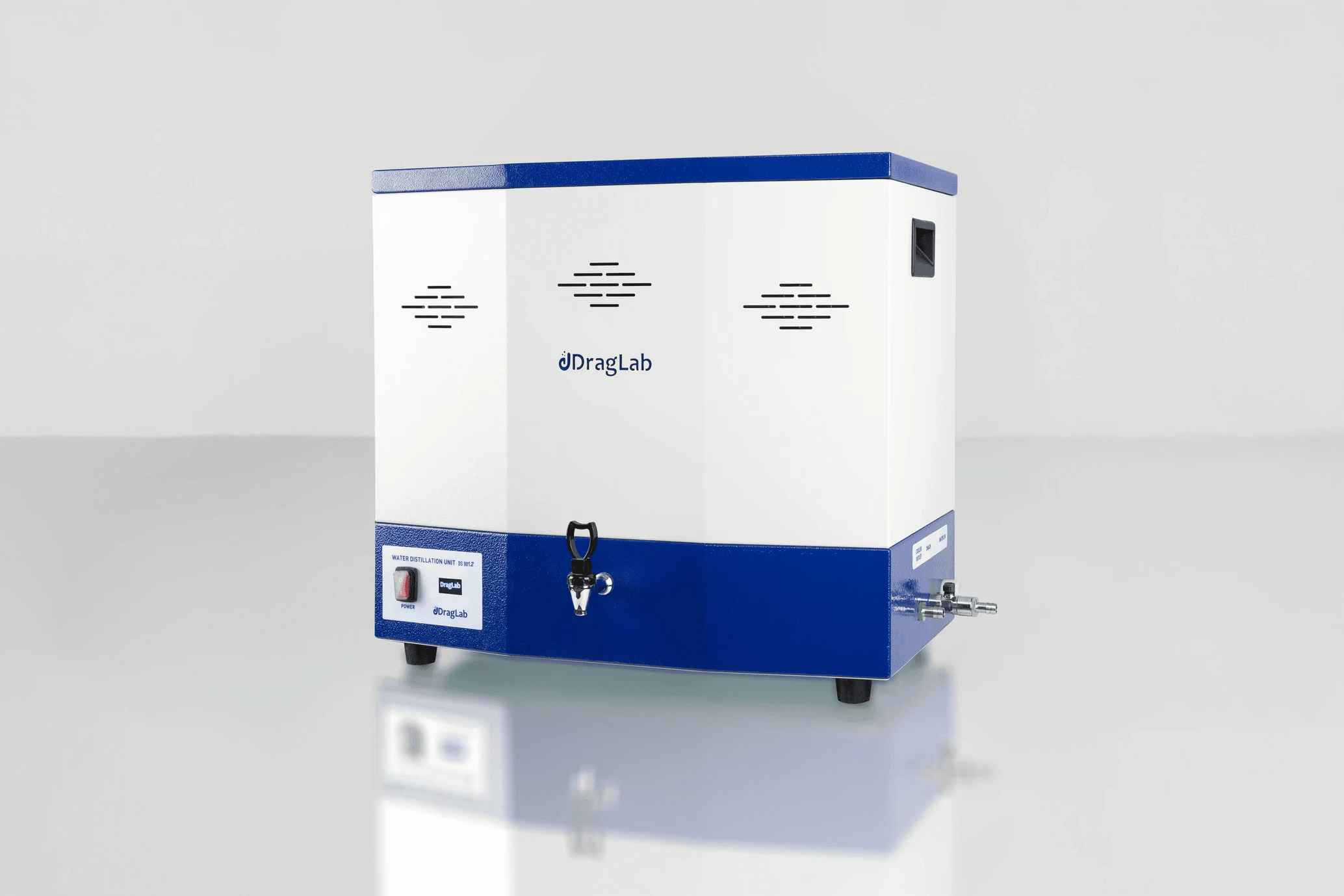
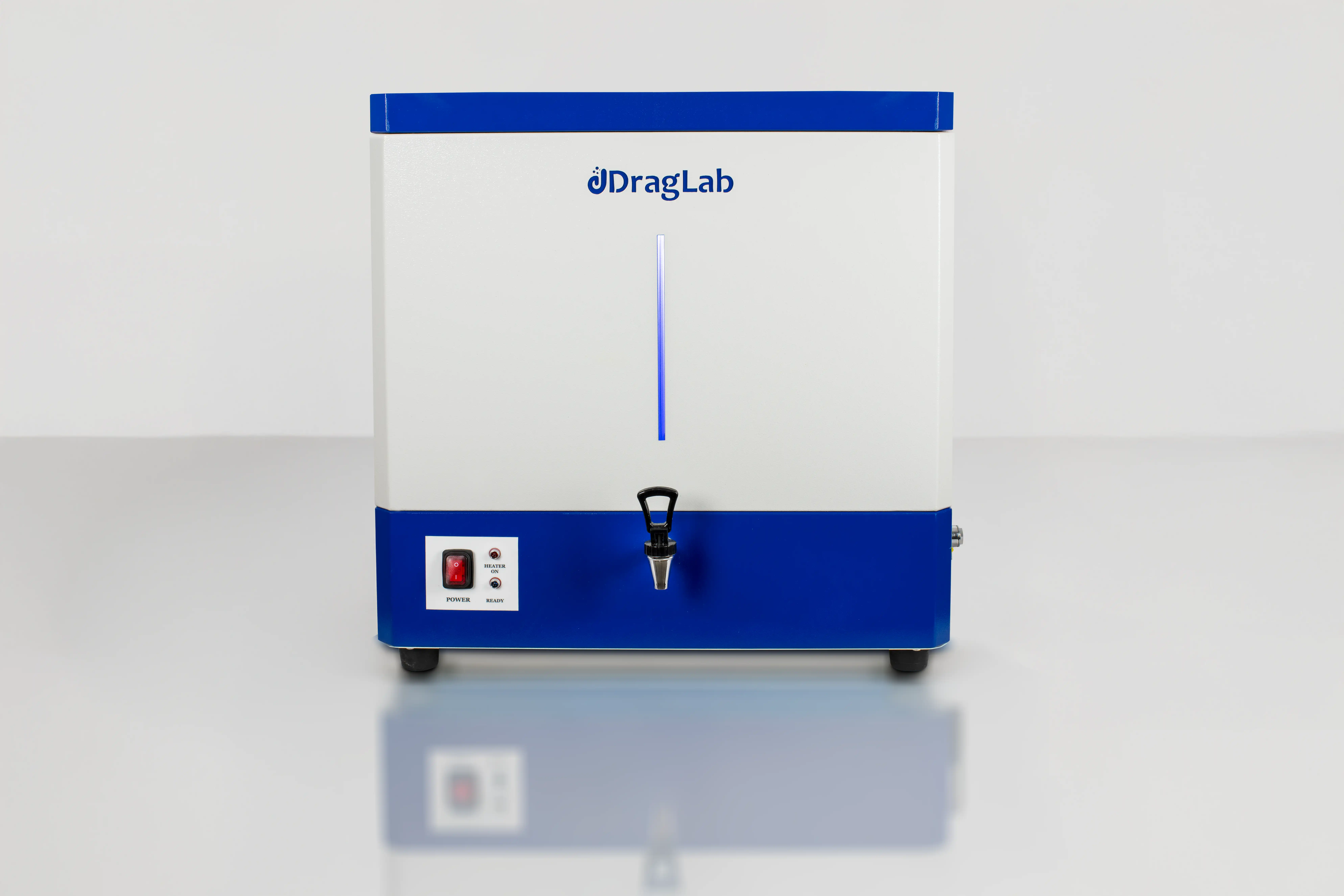
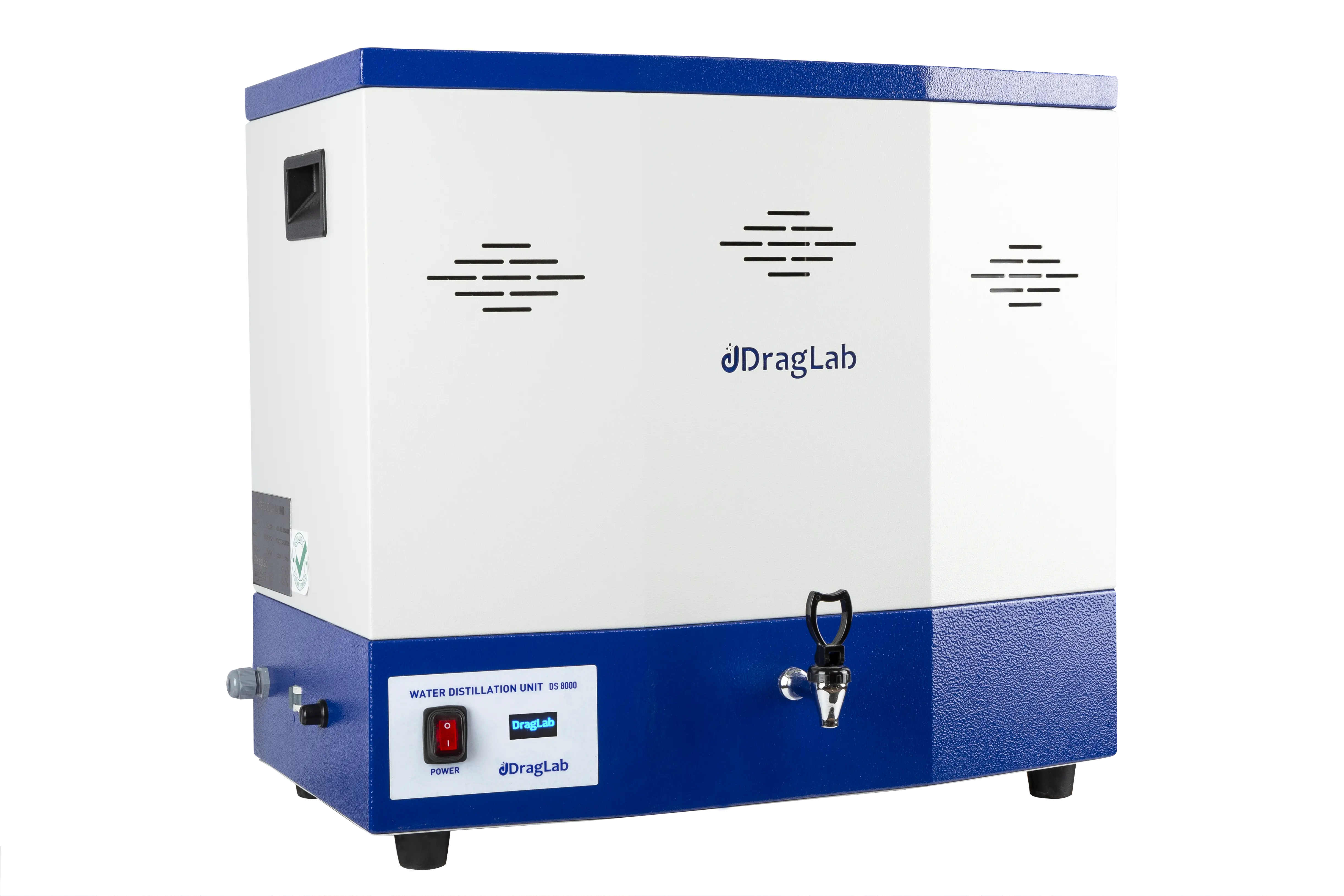
Modern laboratories continue to rely on distillation systems such as the DragLab Water Still Series to produce consistent, high-quality distilled water for daily laboratory operations.
Why Distilled Water Is Essential in Laboratories
Distilled water is produced by heating water until it evaporates and then condensing the vapor back into liquid form. Because most contaminants do not evaporate with water, they remain in the boiling chamber while purified water is collected from the condenser.
This process produces water with relatively low conductivity—typically around ~2.5 µS/cm at 25°C—making it suitable for a wide range of laboratory uses.
The consistent purity of distilled water helps laboratories maintain accurate results, prevent contamination, and protect sensitive equipment.
1. Preparation of Chemical Solutions
One of the most common uses of distilled water in laboratories is the preparation of chemical reagents and solutions. Impurities present in tap water can alter chemical reactions or introduce unwanted ions that affect analytical measurements.
Using distilled water ensures that chemical solutions are prepared with controlled and predictable composition, improving experimental accuracy and reproducibility.
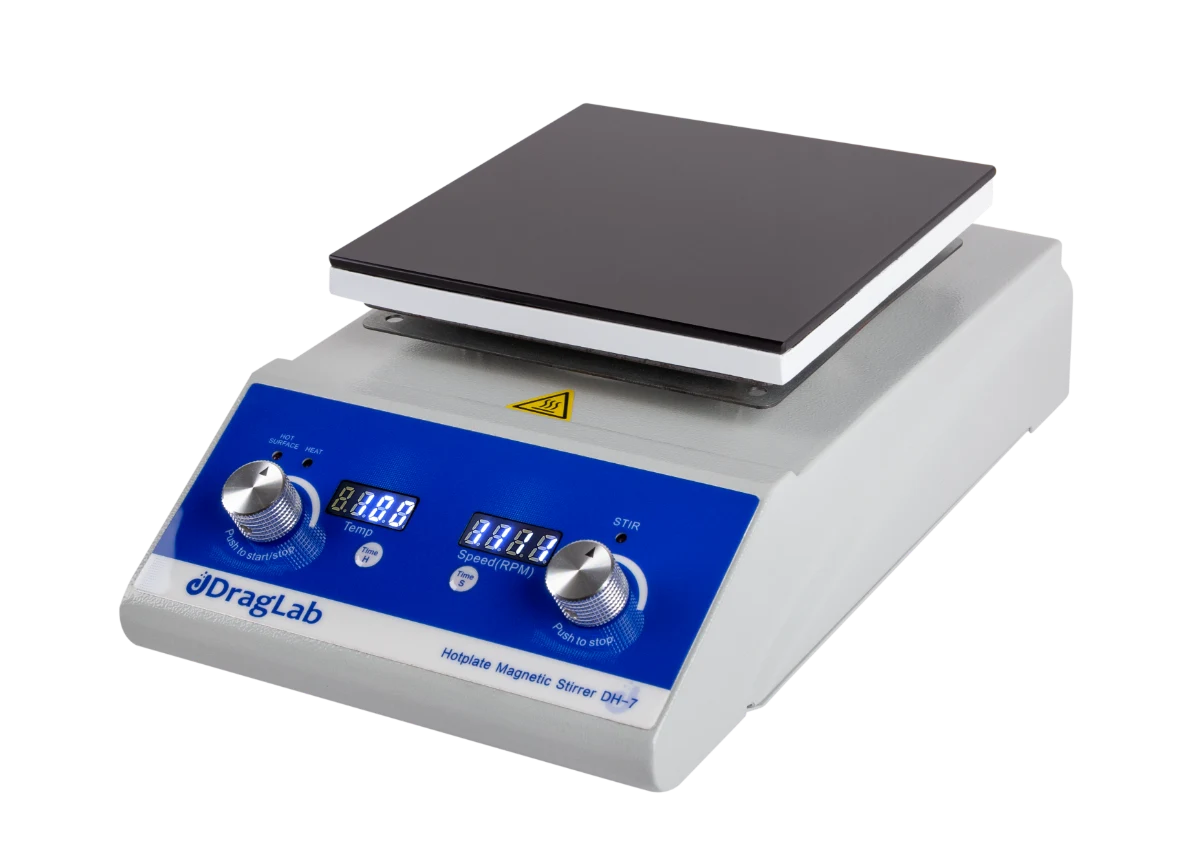
In many laboratories, solution preparation also involves heating and mixing processes. Equipment such as the DragLab Hotplate Magnetic Stirrer Series is frequently used to heat reagents and maintain uniform mixing during solution preparation.
2. Microbiology and Culture Media Preparation
Microbiology laboratories rely heavily on distilled water when preparing growth media for bacteria, fungi, and other microorganisms.
Culture media must be free from contaminants that could influence microbial growth. Minerals and impurities in untreated water may inhibit or alter microbial activity, leading to inaccurate experimental results.
Distilled water produced by laboratory water still systems provides the purity required for reliable microbiological research and diagnostic testing.
3. Pharmaceutical and Biomedical Research
Pharmaceutical laboratories use distilled water in multiple stages of drug research and development. It is often required for:
- Preparing pharmaceutical formulations
- Diluting chemical compounds
- Cleaning laboratory equipment
- Supporting quality control procedures
In these environments, consistent water purity is essential to maintain regulatory compliance and ensure accurate analytical testing.
Laboratory water distillation systems therefore play an important role in pharmaceutical manufacturing and research facilities.
4. Cleaning and Rinsing Laboratory Glassware
Laboratory glassware must be thoroughly cleaned to prevent contamination between experiments. Tap water often contains minerals that can leave deposits or residues on glass surfaces.
Distilled water is commonly used for the final rinse when cleaning glassware, ensuring that no mineral residues remain after washing. This practice is particularly important for analytical laboratories where trace contamination can influence experimental results.
Using distilled water for glassware cleaning helps maintain laboratory standards and protects sensitive instruments.
5. Analytical and Quality Control Testing
Many analytical procedures require high-purity water to ensure reliable measurements. Distilled water is commonly used in quality control laboratories for:
- Sample dilution
- Instrument calibration
- Reagent preparation
- Analytical testing procedures
Contaminants present in untreated water can interfere with analytical instruments and produce inaccurate results. Distilled water helps maintain the precision required in laboratory testing environments.
6. Educational and Research Laboratories
Universities and research institutions frequently use distilled water in teaching laboratories and experimental research. Students and researchers require purified water for preparing solutions, conducting experiments, and cleaning laboratory equipment.
Laboratory water still systems offer a practical and reliable solution for producing distilled water in academic environments where consistent water quality is necessary for educational experiments and scientific studies.
Advantages of Using Laboratory Water Stills
Laboratory water stills remain widely used because they provide several practical advantages:
- Reliable removal of dissolved minerals and contaminants
- Consistent water purity suitable for many laboratory tasks
- Durable stainless-steel construction for long operational life
- Relatively simple maintenance compared to complex purification systems
Modern systems such as the DragLab Water Still Series are designed to provide scalable water production for laboratories of different sizes, from small research facilities to large institutional laboratories.
Conclusion
Distilled water plays a vital role in modern laboratory operations. From chemical solution preparation to microbiological research and analytical testing, purified water ensures that scientific experiments remain accurate and reproducible.
Laboratory water still systems provide a dependable method for producing distilled water by removing impurities through thermal distillation. When combined with essential laboratory equipment such as heating and mixing systems, laboratories can maintain controlled experimental conditions and high scientific standards.
As laboratory technologies continue to evolve, reliable water purification systems will remain a critical component of scientific research and laboratory infrastructure.
Need help choosing? Contact DragLab today to get a tailored recommendation based on your application.
📧 Email: info@drag-lab.de
🌐 Browse all models: www.drag-lab.de